

-
 Dr. Namrata Agrawal
- Jan. 15, 2026
Anemia
Understanding Low Hemoglobin and Its Impact on Health
What Is Anemia?
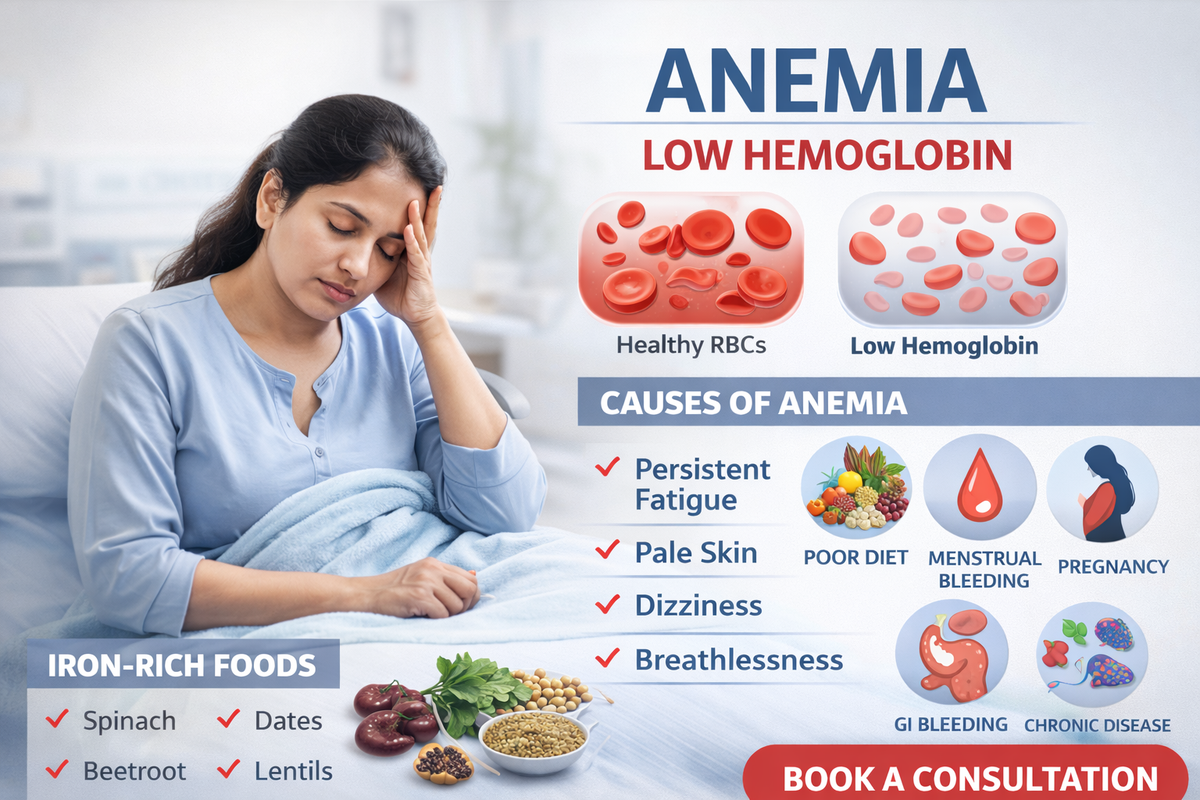
Anemia occurs when the body lacks enough healthy red blood cells or hemoglobin to carry oxygen efficiently. It is one of the most common health problems, especially among women, children, and elderly individuals.
Common Types of Anemia
Iron deficiency anemia (most common)
- Vitamin B12 deficiency anemia
- Folic acid deficiency anemia
- Anemia due to chronic diseases
- Blood loss-related anemia
Causes of Anemia
- Poor nutritional intake
- Heavy menstrual bleeding
- Pregnancy
- Gastrointestinal bleeding
- Chronic infections or diseases
Symptoms of Anemia
Symptoms may develop gradually and include:
- Persistent tiredness and weakness
- Pale skin and lips
- Shortness of breath
- Dizziness or headaches
- Cold hands and feet
- Difficulty concentrating
How Is Anemia Diagnosed?
- Blood tests to check hemoglobin levels
- Iron, Vitamin B12, and folate levels
- Additional tests to identify the cause
Treatment and Prevention
- Iron-rich diet: spinach, beetroot, dates, jaggery, lentils
- Vitamin C intake to enhance iron absorption
- Iron or vitamin supplements as prescribed
- Treating underlying causes
When to Seek Medical Care
If fatigue persists despite rest or symptoms worsen, timely medical evaluation is important to prevent complications.