

-
 Dr. Namrata Agrawal
- Jan. 15, 2026
Obesity
A Growing Health Concern and How to Manage It
What Is Obesity?
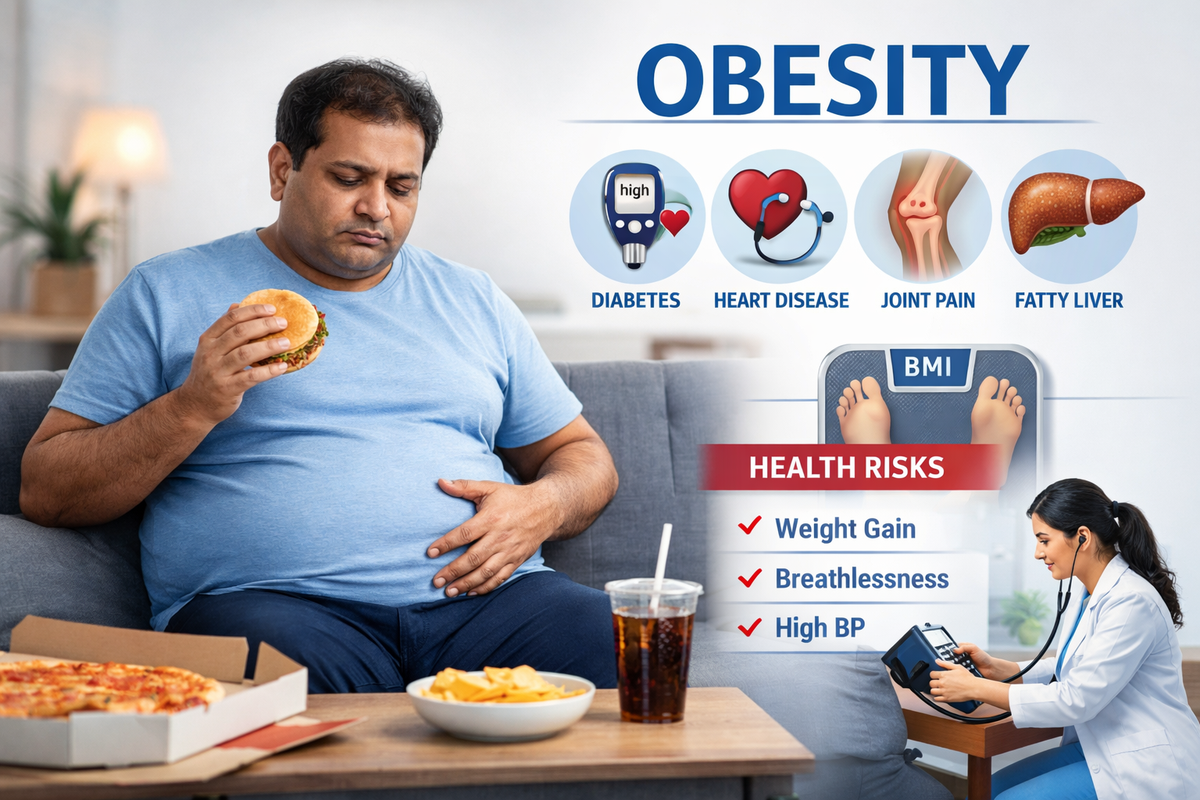
Obesity is a chronic medical condition characterized by excessive accumulation of body fat that negatively impacts health. Doctors commonly use Body Mass Index (BMI) to assess obesity. A BMI between 25–29.9 is considered overweight, while 30 or above indicates obesity.
Obesity is not just a cosmetic issue—it significantly increases the risk of many serious and long-term health problems.
Why Is Obesity Increasing?
In today’s fast-paced lifestyle, obesity has become increasingly common due to:
- High consumption of fast food and sugary beverages
- Reduced physical activity
- Long working hours and stress
- Irregular sleep patterns
- Excessive screen time
- Genetic predisposition
Health Problems Linked to Obesity
Obesity can affect almost every organ in the body, leading to:
- Type 2 diabetes
- High blood pressure and heart disease
- Stroke
- Joint pain and arthritis
- Breathing problems like sleep apnea
- Fatty liver disease
- Hormonal imbalances and infertility
How Can Obesity Be Managed?
Obesity management requires a long-term lifestyle approach, not quick fixes.
Healthy Eating Habits
- Choose fresh fruits, vegetables, whole grains, and lean proteins
- Reduce fried foods, sweets, and processed snacks
- Eat smaller portions and avoid late-night meals
- Stay hydrated
Physical Activity
- Aim for at least 30–45 minutes of exercise daily
- Walking, yoga, swimming, or cycling are excellent options
- Start slowly and increase gradually
Medical Support
- Weight management plans under medical supervision
- Treatment of underlying conditions like thyroid disorders
- Behavioral counseling when needed
When Should You Consult a Doctor?
If weight gain is sudden, associated with breathlessness, joint pain, or difficulty performing daily activities, medical evaluation is essential.